
Before installation: a homeowner’s paving project checklist
Plan your scope, approvals, access and installation sequence, then keep the finished surface in good condition with product-specific care.
A little preparation makes the project easier to understand
A paving project brings together design decisions, site conditions, materials and a sequence of work. You do not need to solve every technical question before contacting a contractor, but a few organized notes help everyone start with the same picture. Write down the problem you want to solve and the result you hope to see. Separate essentials from preferences: better drainage may be essential, while a particular border color may be flexible. Include the spaces that need to remain usable during the work. These details help shape an estimate that responds to the way you actually live at the property.
Document the existing conditions
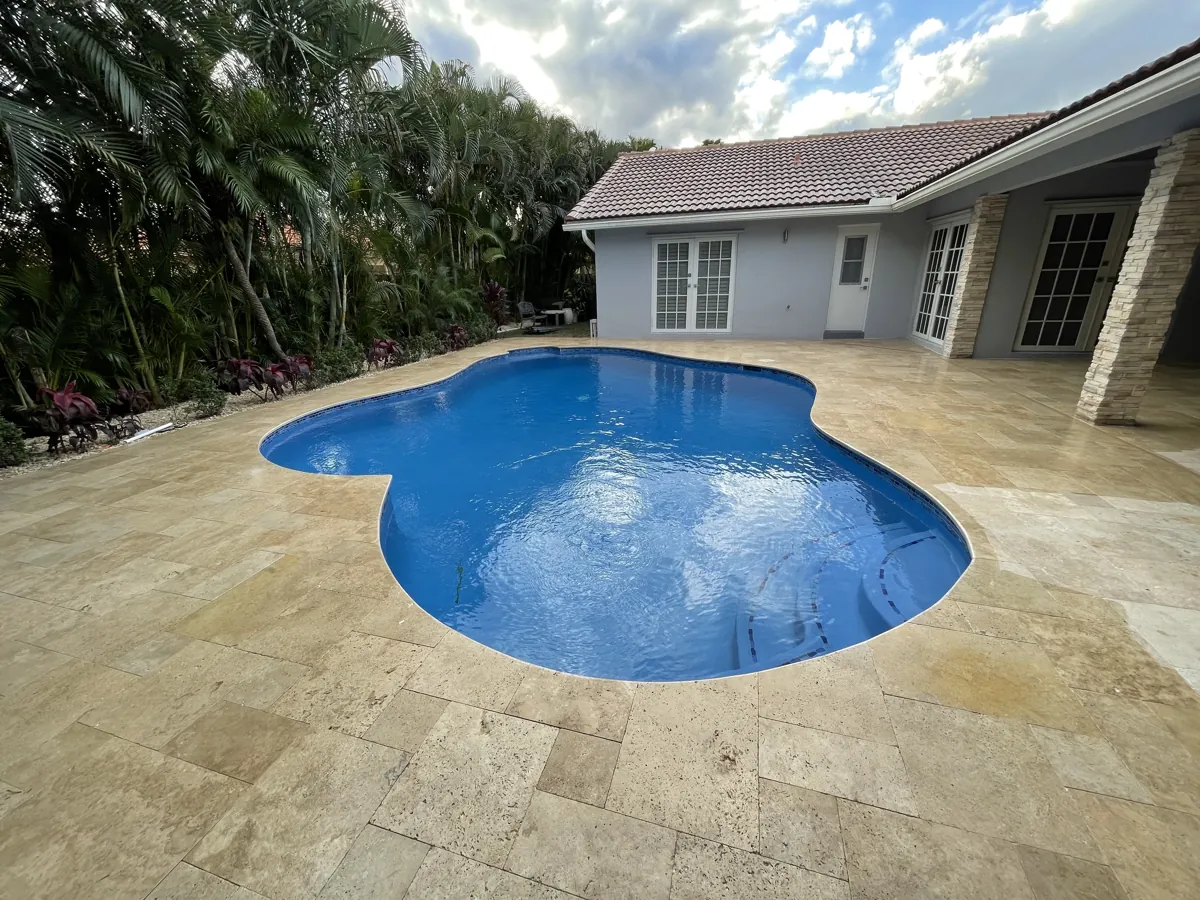
Take photographs from several directions, including the route from the street to the work area. Show doors, steps, pool coping, drains, planting beds and adjoining surfaces. If water collects after rain, a photograph taken safely can make the issue easier to explain. Note visible cracks or uneven areas without assuming their cause. Keep any plans or records of previous work available, especially information about irrigation or utilities. Approximate dimensions and a simple sketch are useful at this stage. They do not replace a site assessment, but they help communicate the scale and relationships of the proposed project.
Check the address and the authority responsible
Local requirements depend on the property and the proposed work. A mailing city does not always answer which authority reviews a project, so confirm the jurisdiction for the actual address. Start with the relevant city or county building department and describe the scope accurately. Ask what approvals, plans or other information may be needed and how to confirm the applicable process. This article is a planning checklist, not a determination that your project requires or is exempt from a permit. Requirements can change and vary by scope. Keep the response and reference information with your project records so responsibilities remain clear.
Review association requirements separately
If the property belongs to an association, ask for its current process before ordering materials or agreeing a start date. It may request a layout, color samples or other project information. Association review and government requirements are separate questions; satisfying one does not automatically satisfy the other. Ask about delivery windows, parking, equipment access and working arrangements as well as appearance. For a managed property, establish who can approve the design and who will communicate with residents. Getting these details in writing helps avoid a project that is ready to install but still waiting on a decision from someone outside the contractor’s control.
Make the written scope specific
The estimate should identify the area, selected material or allowance, preparation, pattern, borders, transitions and relevant drainage work. Removal, disposal and restoration of adjacent areas should be addressed where applicable. Ask which items are excluded and whether another trade needs to be involved. If the existing surface hides conditions that cannot be assessed in advance, agree how discoveries will be handled. A change process should make the reason, cost and scheduling effect understandable before additional work proceeds. Do not rely on a broad phrase such as complete renovation to define every detail. Specific boundaries are helpful to both homeowner and contractor.
Coordinate any related work
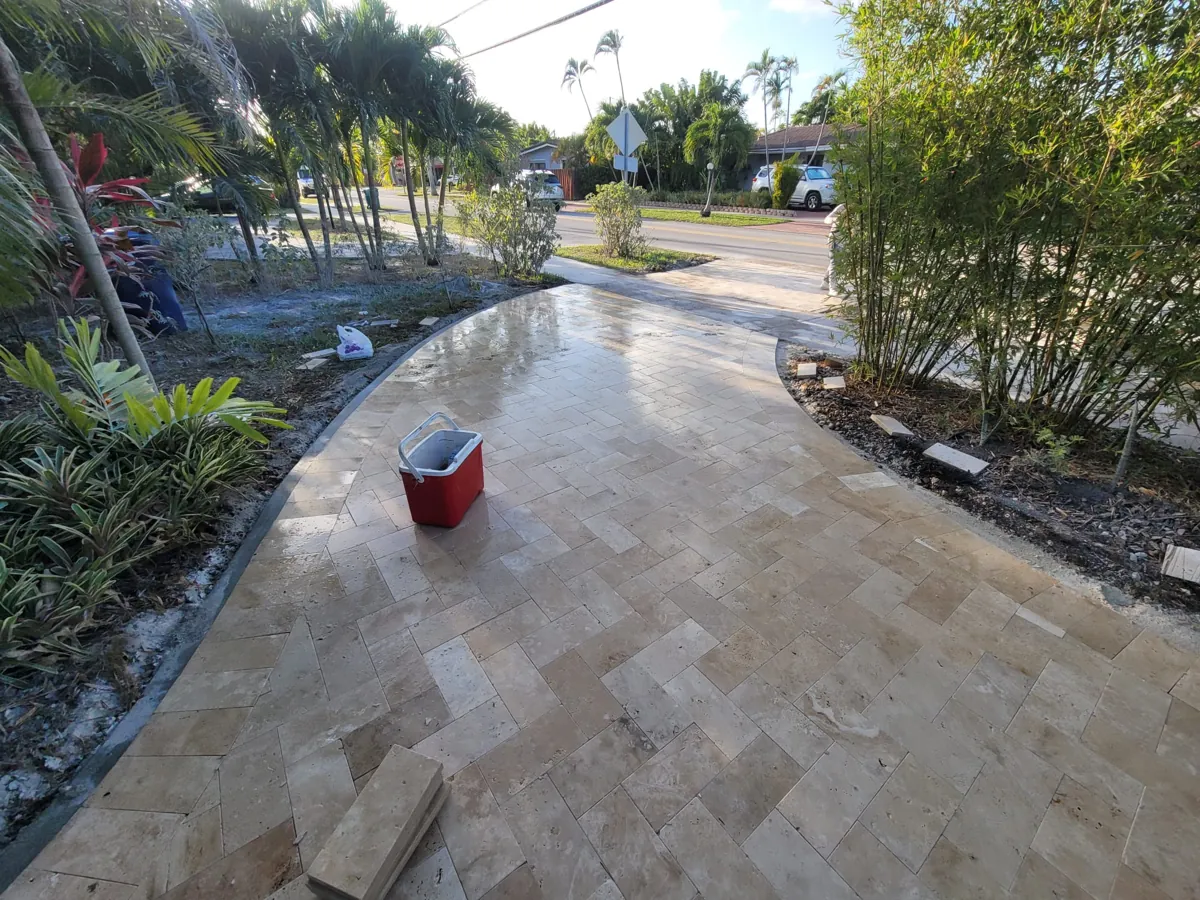
Paving may sit alongside pool renovation, irrigation adjustments, landscaping, electrical work or other improvements. The order matters. A finished surface can be disrupted if another trade still needs access below or across it. Tell each contractor what else is planned and identify who is coordinating the sequence. Confirm the interfaces at drains, coping, doors and planted areas. A deck estimate does not automatically include changes to the pool shell or equipment, and a flooring estimate does not automatically include plumbing or waterproofing beyond its stated scope. Clear coordination reduces the chance of assumptions appearing only after work is underway.
Plan access, parking and material storage
Think through how people and materials will enter the property. Identify narrow gates, steps, low clearances and areas that must remain accessible. Discuss where deliveries and removed material can be placed, subject to applicable property and association rules. A driveway replacement may temporarily change where vehicles can park. Interior tile work may affect furniture placement and access between rooms. Keep pets and children away from the work area and agree a practical communication plan for visitors or residents. These arrangements should be discussed before installation, when there is time to solve them without interrupting work.
Treat the schedule as a sequence with dependencies
A proposed start date depends on more than available labor. Material availability, approvals, weather, access and completion of related work can all influence the sequence. Ask what needs to be resolved before scheduling and how changes will be communicated. Different products and installation systems have different return-to-use requirements. Delivery does not mean the area is ready to use, and the final visible installation step may not be the end of the waiting period. Share important dates early, but avoid planning an event or dependent delivery around an unconfirmed assumption. A clear sequence is more useful than an unsupported promise of a universal completion time.
Walk through the finished work with your records
At completion, review the area against the agreed scope. Look at edges, transitions and the details that were discussed at the beginning. Ask questions about anything you do not understand and record any follow-up items. Keep the product names, color references, care instructions and applicable written warranty information. If spare material is recommended, establish how much to retain and where it can be stored safely. For a managed property, pass the care information to the people responsible for maintenance. A surface can be installed appropriately and still be damaged later by an unsuitable cleaner or maintenance method.
Use a care routine matched to the material
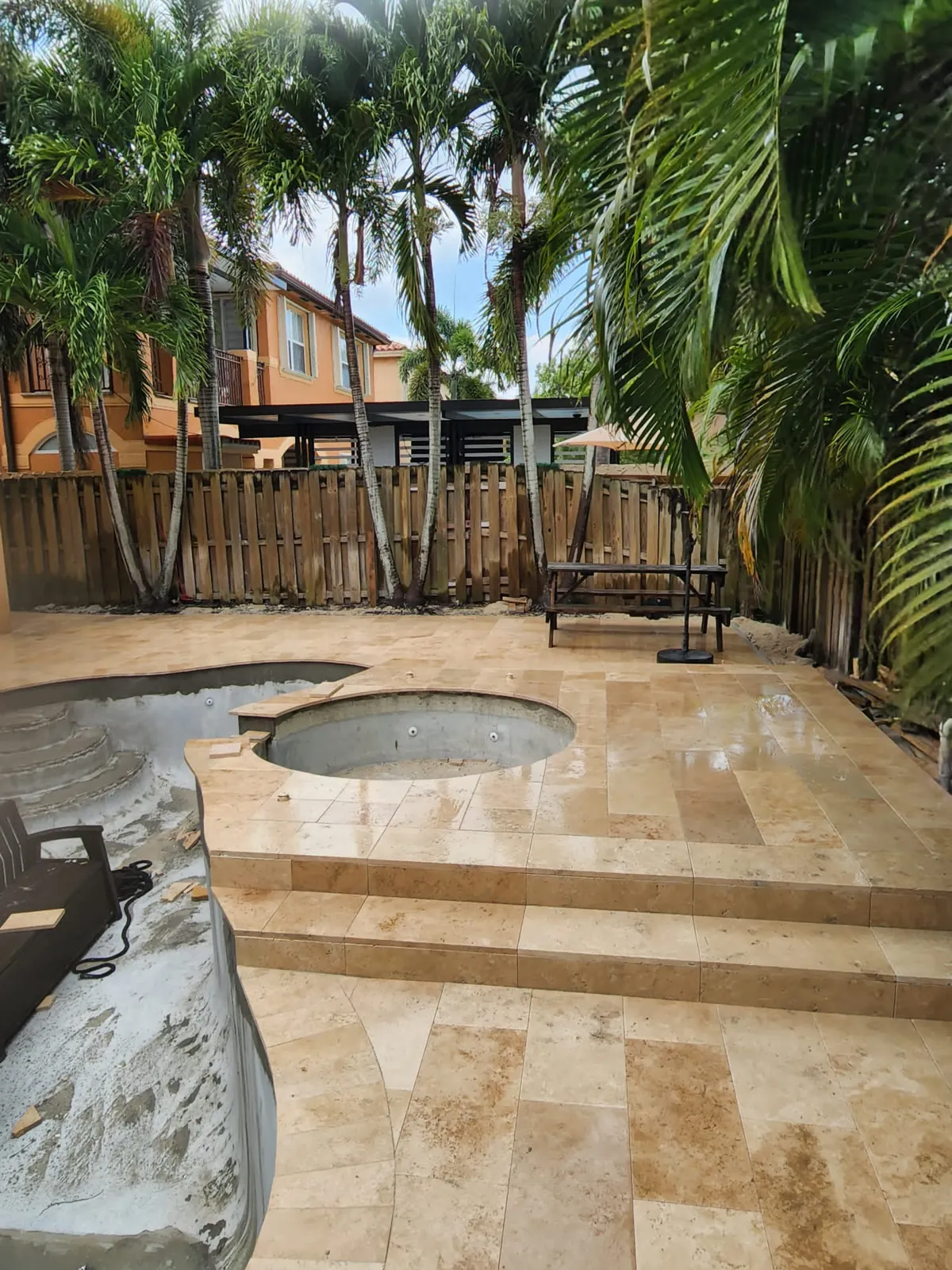
Begin with the actual manufacturer’s instructions rather than a generic cleaning tip. Sweep away debris, address spills promptly and use compatible cleaning products. Natural stone, concrete pavers, porcelain, joints and coatings may have different requirements. Do not assume a sealer or pressure-washing method suitable for one surface is suitable for all of them. Persistent standing water, movement or recurring staining deserves investigation rather than repeated cosmetic treatment. Keep a record of significant maintenance and contact the appropriate professional if conditions change. Routine attention makes it easier to spot a developing issue while it is still understandable.
Care references: CMHA’s paver maintenance guidance and Natural Stone Institute’s cleaning guidance.
Start with a useful estimate conversation
Tile and Pavers serves homeowners and property managers in Boca Raton and across Palm Beach, Broward and Miami-Dade counties. Send the property address, approximate size, photographs and a short description of what you want to improve. Include any known approval requirements, access restrictions or related work. We can then discuss the service, material options and information needed for a project-specific estimate. You do not need to know every construction detail before reaching out. Your priorities, a clear view of the existing space and an honest discussion of the scope are enough to take the next step.
Keep planning your project
Explore our Boca Raton service page or the full South Florida service area. Browse the project gallery for layout ideas and request a free estimate for your property.
Official starting points
Confirm current requirements directly with the relevant authority: City of Boca Raton, Palm Beach County, Broward County or Miami-Dade County. These links are starting points for identifying the right office, not a determination of your project’s requirements.