
Stone, porcelain or pavers: how to choose your outdoor surface
A practical guide to comparing texture, heat, drainage, maintenance and appearance before choosing a patio or pool deck material.

Choose for your daily life outside
An outdoor surface has to do more than look good in a photograph. It needs to work with the way you move through the space, the amount of sun it receives and the care you are willing to give it. A quiet terrace used for morning coffee is different from a busy pool surround or the main route between the house and garden. Begin by describing those activities. Note where people walk barefoot, where chairs move and where rainwater currently collects. That practical picture gives material selection a direction. Color and pattern still matter, but they become part of a decision grounded in your own property.
Understand what you are actually comparing
The word paver describes a unit used to create a surface; it does not identify a single material. Concrete pavers, natural stone pavers and porcelain pavers have different characteristics, and there is variation within each group. A broad category cannot tell you whether a specific product suits a pool deck, driveway or another application. Ask for the actual product name, intended use and installation guidance. Thickness and supporting construction matter as well as the visible face. This is especially important when comparing samples that look similar. Two pale rectangular pieces may create a related aesthetic while requiring different installation and maintenance decisions.
Natural stone brings variation into the design
Natural stone can offer color movement, texture and a less uniform appearance. Those qualities can be appealing when you want the surface to feel connected to planting or existing masonry. They also mean a small sample may not show the full range of the delivered material. Ask about expected variation and review more than one piece where practical. Different stones and finishes have different care requirements, so avoid relying on general advice for all stone. Some products may require sealing or particular cleaning methods. Confirm the manufacturer or supplier guidance for the exact selection, including suitability for the intended outdoor and wet-area use.
Care reference: Natural Stone Institute’s stone care guidance.
Porcelain can create a more controlled visual rhythm
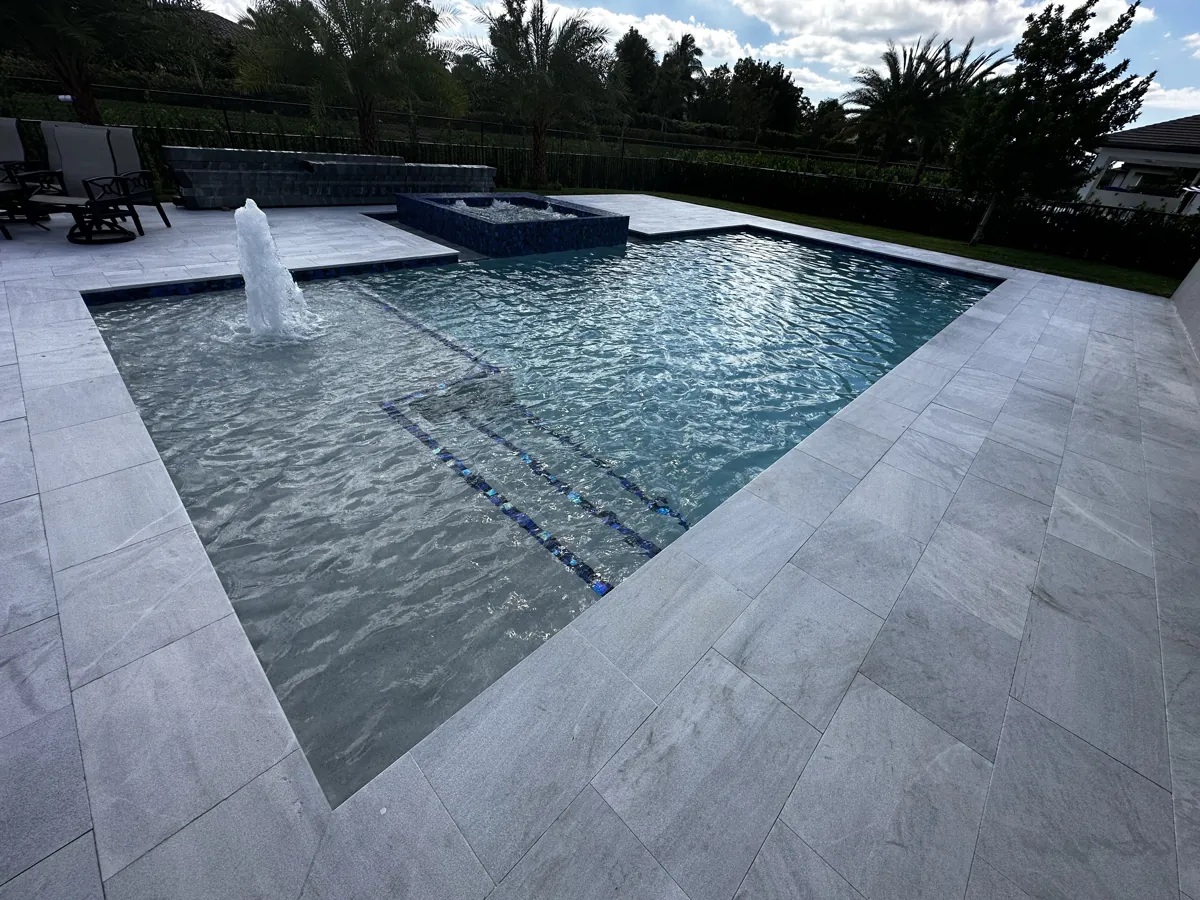
Exterior porcelain pavers are often considered for their clean formats and broad choice of surface designs. A restrained finish can work well with modern architecture or a coordinated indoor-outdoor palette. The product still needs to be intended for the application. Indoor tile and exterior pavers are not interchangeable simply because both are porcelain. Review the installation system, edge details, joints and support requirements. Large formats also make layout planning important, particularly around curves, doors and pool coping. Ask how the design will handle cuts and transitions so the simplicity you like in a sample carries through to the finished space.
Installation reference: Tile Council of North America on placement and movement joints. Follow the requirements for the selected system.
Concrete pavers offer another design vocabulary
Concrete pavers can provide a range of sizes, colors and laying patterns. Modular units allow borders and changes of direction to become part of the design. They may suit a driveway, path or patio when the product and installation are appropriate for that use. Review the expected color variation, joint treatment and edge restraint rather than selecting by color alone. Ask how the surface should be cleaned and whether sealing is recommended for the particular product and your goals. As with other materials, a good-looking top layer depends on suitable preparation beneath it. The full assembly matters more than the material label on its own.
Texture and wet conditions deserve a careful discussion
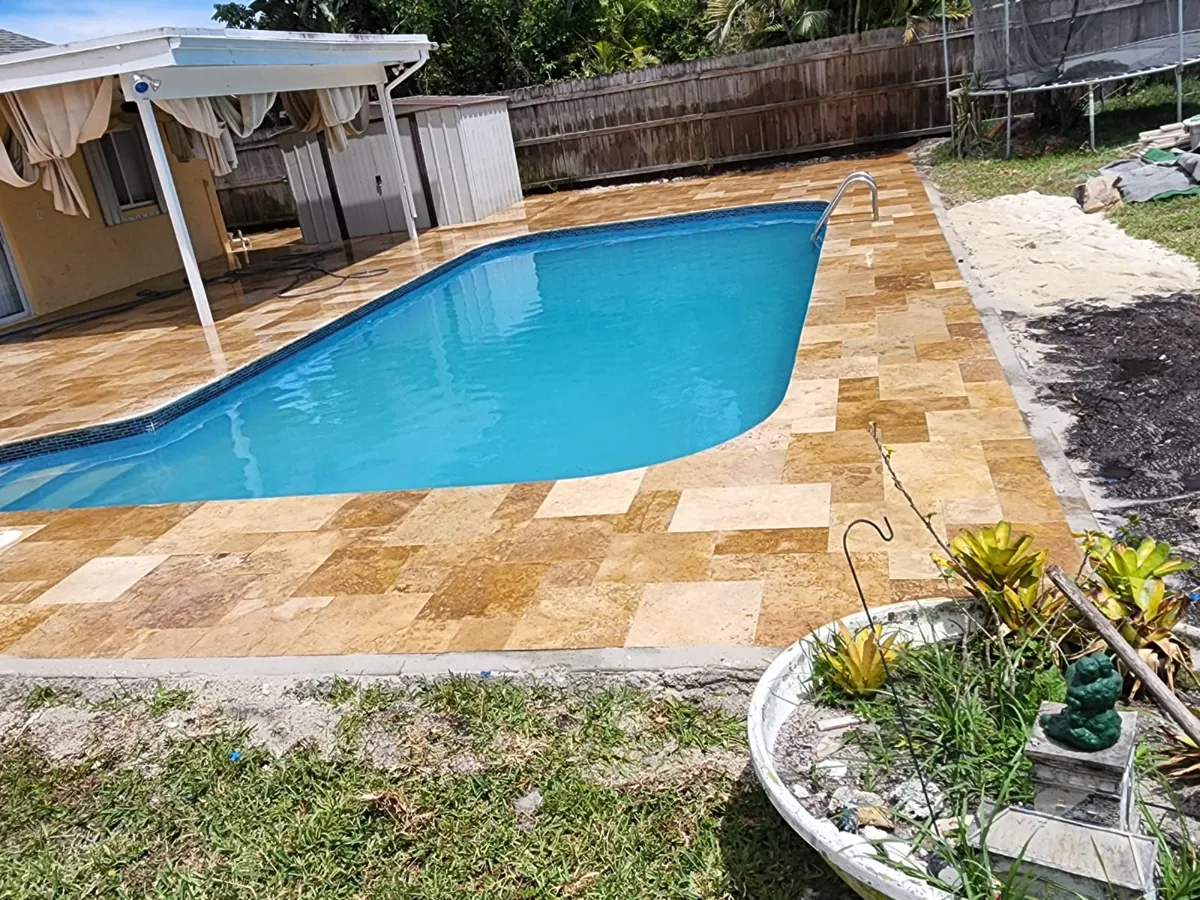
Around a pool, a surface may be wet while people are walking barefoot. Ask for the specific product’s guidance for the intended setting and discuss how texture will feel in everyday use. Avoid treating labels such as non-slip as an absolute promise. Water, debris, wear and cleaning can all affect conditions, and no surface removes the need for care. A sample can help you understand texture, but it is not a complete assessment of a finished installation. Steps, changes of level and drainage need attention too. The goal is a suitable product within a thoughtful layout, with realistic expectations about use and maintenance.
Think about sunlight, shade and comfort together
Outdoor surfaces can become hot in direct sun. Color, material, exposure and weather influence how a surface feels, so an assurance that a finish always stays cool is not a useful basis for selection. View samples in the setting when possible and consider when the space will be used. Existing shade, future shade plans and the route between doors and the pool can be part of the comfort discussion. Do not choose a surface on temperature claims alone. A material that looks attractive and feels appropriate still needs the right installation, drainage and care plan for your property.
Drainage is a design requirement, not a material feature
A material cannot compensate for an unsuitable layout or unresolved water movement. Before selection, identify standing water, low points and runoff toward the house. The finished heights need to work with doors, drains, coping and adjacent landscape areas. An overlay may reduce the available clearance at a threshold or change the relationship to existing drainage. Ask how the proposed installation addresses those conditions. If other pool or landscape work is planned, coordinate the sequence and responsibilities. This conversation can change the scope more than the choice between two visually similar products, which is why it belongs near the beginning.
Be honest about the maintenance you will do
Think about the trees around the space, how often it is used and whether food, pets or pool activity create regular cleaning needs. Ask for a written care routine for the actual material, joints and any coating. Some finishes may need sealing; others should not receive a coating intended for a different product. Strong chemicals and aggressive pressure washing can create problems when used without suitable guidance. Straightforward routine cleaning is easier to plan for than an occasional attempt to reverse months of neglect. Choose a material whose care requirements fit your habits, and keep the product details for future reference.
Use samples to connect the whole property
Place samples beside exterior paint, coping, doors and the surfaces that will remain. Look at them from inside the house as well as at ground level. A color that looks balanced in isolation may clash with a warm roof or an existing stone border. Consider grout or joint color and the way a border changes the composition. If you want a continuous look between rooms and a terrace, coordinating products may be more appropriate than using the identical item. Keep the selection focused: a small, coherent palette often makes the layout easier to understand than several competing materials.
Bring the decision back to a clear scope
Once you have narrowed the options, compare the complete proposed installations. Ask about preparation, pattern, cuts, edges, transitions, drainage and care. Confirm availability and any applicable written warranty terms before approving the work. Tile and Pavers can discuss these choices as part of a pool deck, porcelain paver or wider outdoor project in South Florida. Send photographs, approximate dimensions and the finishes you are considering. You do not need to arrive with a perfect specification. A clear description of how you want to use the space gives the estimate conversation a useful starting point.
Keep planning your project
Explore our Boca Raton service page or the full South Florida service area. Browse the project gallery for layout ideas and request a free estimate for your property.